
Actionable insights for a client seeking to facilitate the difficult conversations adults have with teenagers about consent.
An Australian child safety charity wanted to explore the desirability and viability of a digital educational product for teachers and parents of early high schoolers, on the topic of consent and respectful relationships. In a lean research team with fellow HCD practitioner Gyongyi Horvath, I delivered a detailed and rigorous research report and product concept produced from our findings from multiple rounds of qualitative interviews with parents, teachers and professional development (PD) decision makers in schools.
Together we traversed difficult ground; uncovering insights that were unexpected by the client, while still able to offer clear actionable next steps for product development and a prototype that put into practice everything we learned.

The client had a really clear intention for the kind of product they wanted to create, based on their perception of the market and their expertise in the area of consent and respectful relationships (C&RR) material.
Due to the organisation’s size and reach and other factors impacting the project, the client needed the solution to be delivered digitally. Their proposed solution was an online PD product for teachers of 13-14 year olds, plus supplementary content free for parents provided by the school. They had a product in the C&RR space already targeted at students themselves and wanted to create an adult targeted product to complement this.
Research objectives
Teachers
We had assumptions about the willingness, awareness, capability and confidence of teachers that we wanted to validate. This would inform the development of the PD material to ensure it was targeted, valuable and timely.
We also sought to gather details around teachers’ PD budget, goals, constraints and motivators to allow us to uncover opportunities for monetisation and scale in the PD market.
PD Decision Makers
After an initial round of research with classroom teachers showed some serious challenges, we sought out senior management in a variety of schools.
We aimed to understand in depth how decisions about PD are made; budgets, priorities, preferred providers and other key information to market the solution.
Research and Design methods
-
To uncover known unknowns and assumptions that informed a discussion guide for the first round of research.
-
4x teachers with exposure to the client’s existing product in the space and 4x teachers who may be a target audience for a PD offering. Paired interviews helped us keep the project rolling at pace and allowed teachers to share their reflections in contrast with one another, further deepening our understanding of the environment teachers operated in when delivering C&RR content or support to students.
-
We analysed research the client did with parents from their network. Questions centred around the parents’ awareness of what was taught on the topic in school and their supportiveness of it.
-
The product concept was something already planned as an output informed by the research. But with the hurdles to market viability identified in the first round of research, we decided to pivot and produce this before the research was complete in order to used it as a ‘straw-man’ to facilitate conversation in the second round of research.
-
Based on phase 1, we identified that the following are key decision-makers for school-wide and individual teacher PD:
Professional development/learning coordinator
Head of Wellbeing
Deputy or Vice Principal
Principal
The sessions were part discovery and part concept validation. We investigated the decision-making process around PD, specifically whole school PD, including key factors, requirements, as well as pricing and buying behaviours. We explored what a winning value proposition could be for whole-school respectful relationships PD, including preferred features, selling points and design direction explored through a design concept as a conversation stimulus.
Overcoming barriers to market viability
Delivery mode
Teachers prefer face-to-face PD opportunities because of better engagement, networking opportunities and the chance to be outside the school setting.
Market size
PD is self-directed, and teachers prioritise their own subject areas. If they are not Health and PE teachers, teachers expected the school to provide or organise relevant PD around respectful relationships content.
Funding
Teachers, regardless of school resourcing, expect their school to fund PD rather than having to pay out of pocket. They are also resourceful - for their yearly budget they will purchase one high quality training and find free resources to complement.
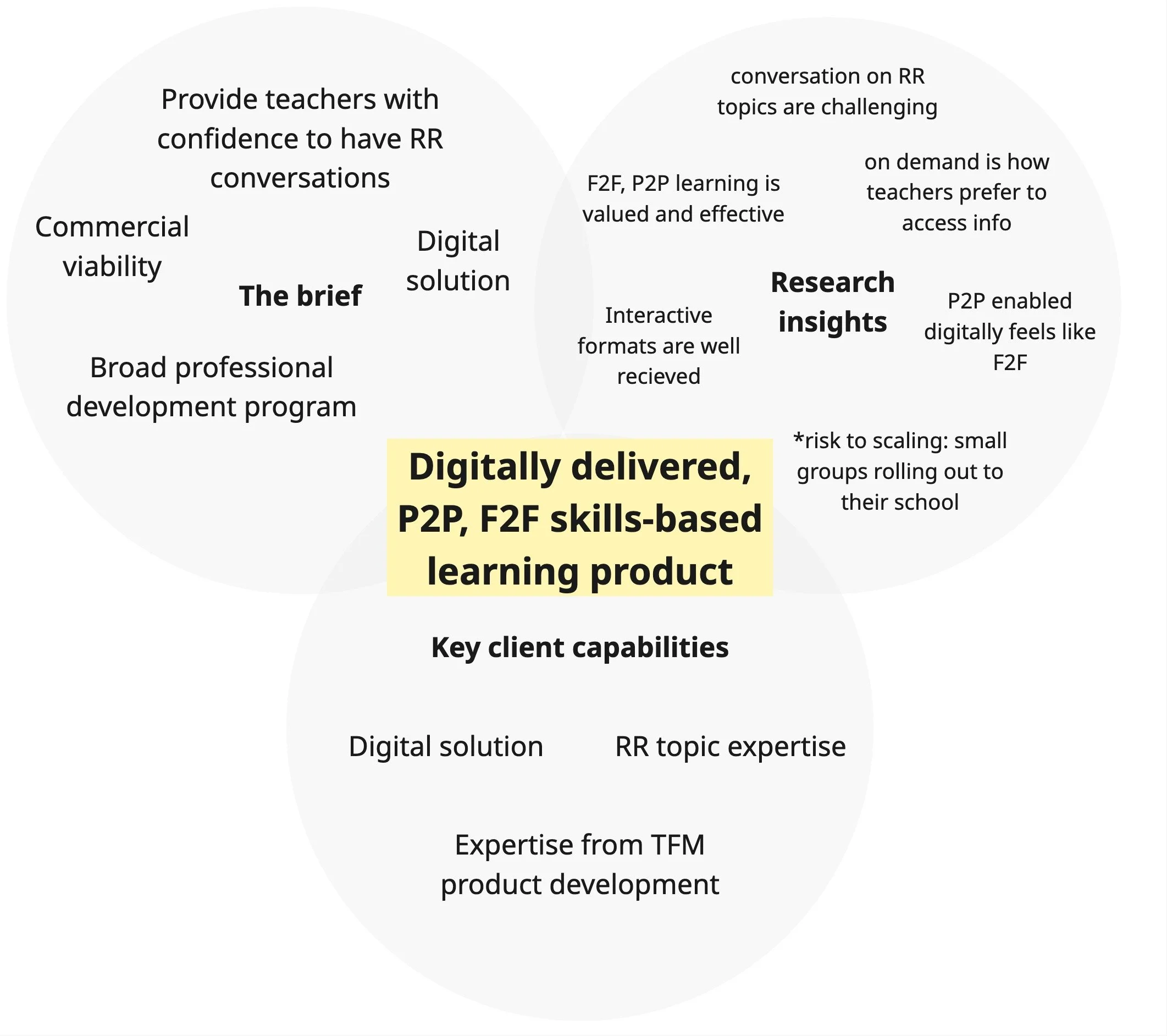
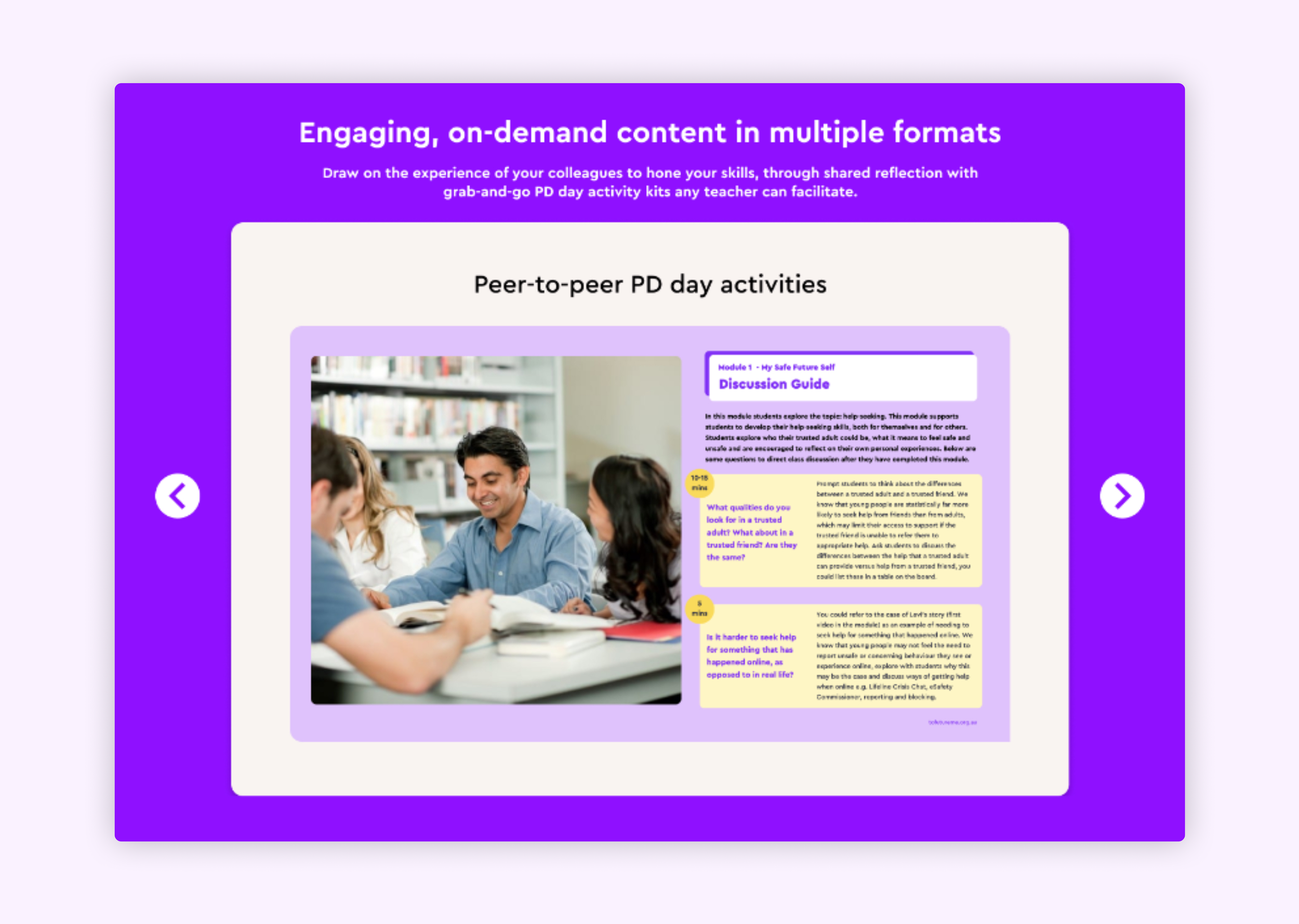
Despite this, a clear opportunity emerged: What if we created a resource that enabled teachers to educate each other?
Due to the cost of putting all teachers through a program, schools often look to a P2P approach to fund PD for a small group of teachers and get them to share back learnings as a whole school PD solution.
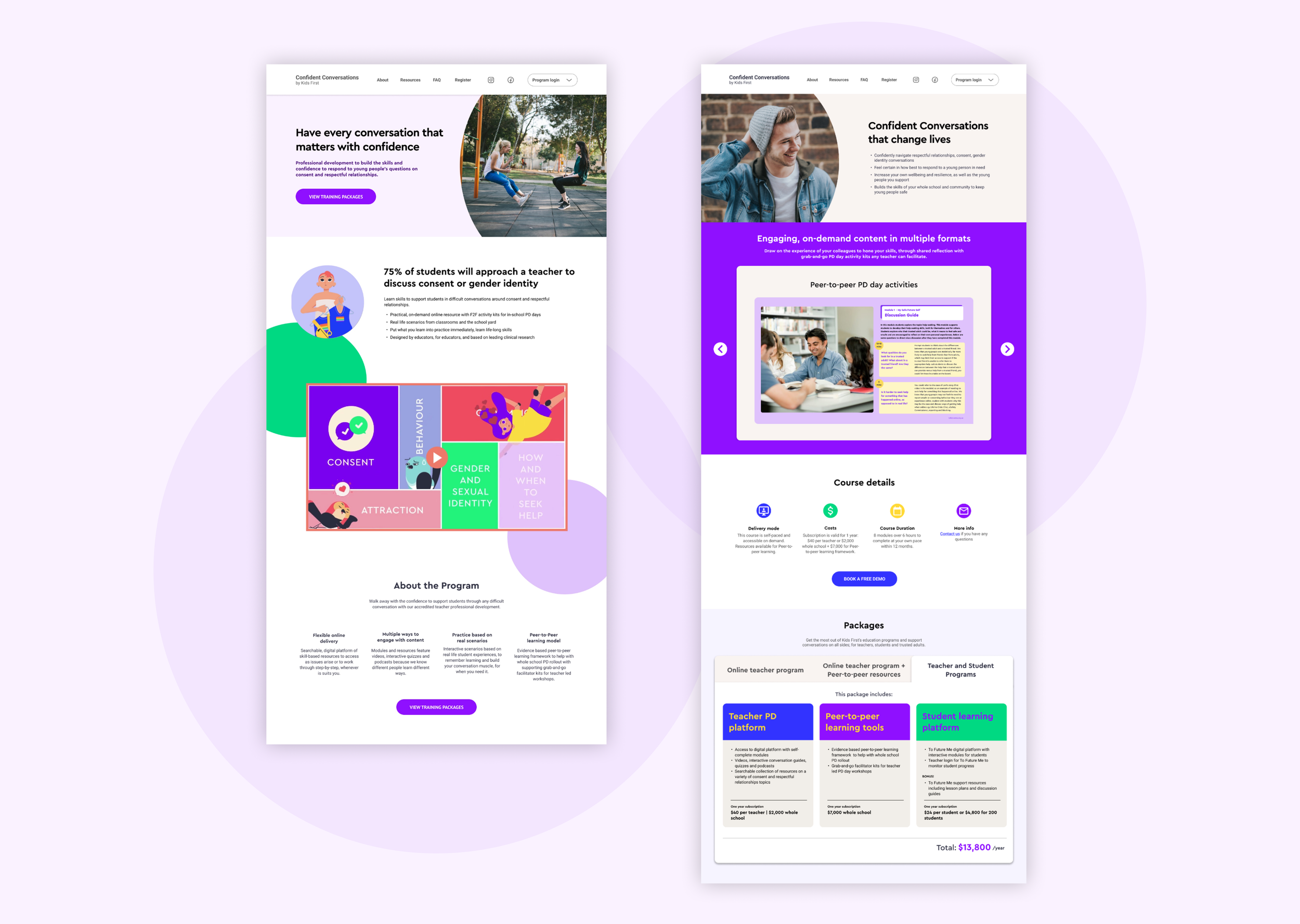
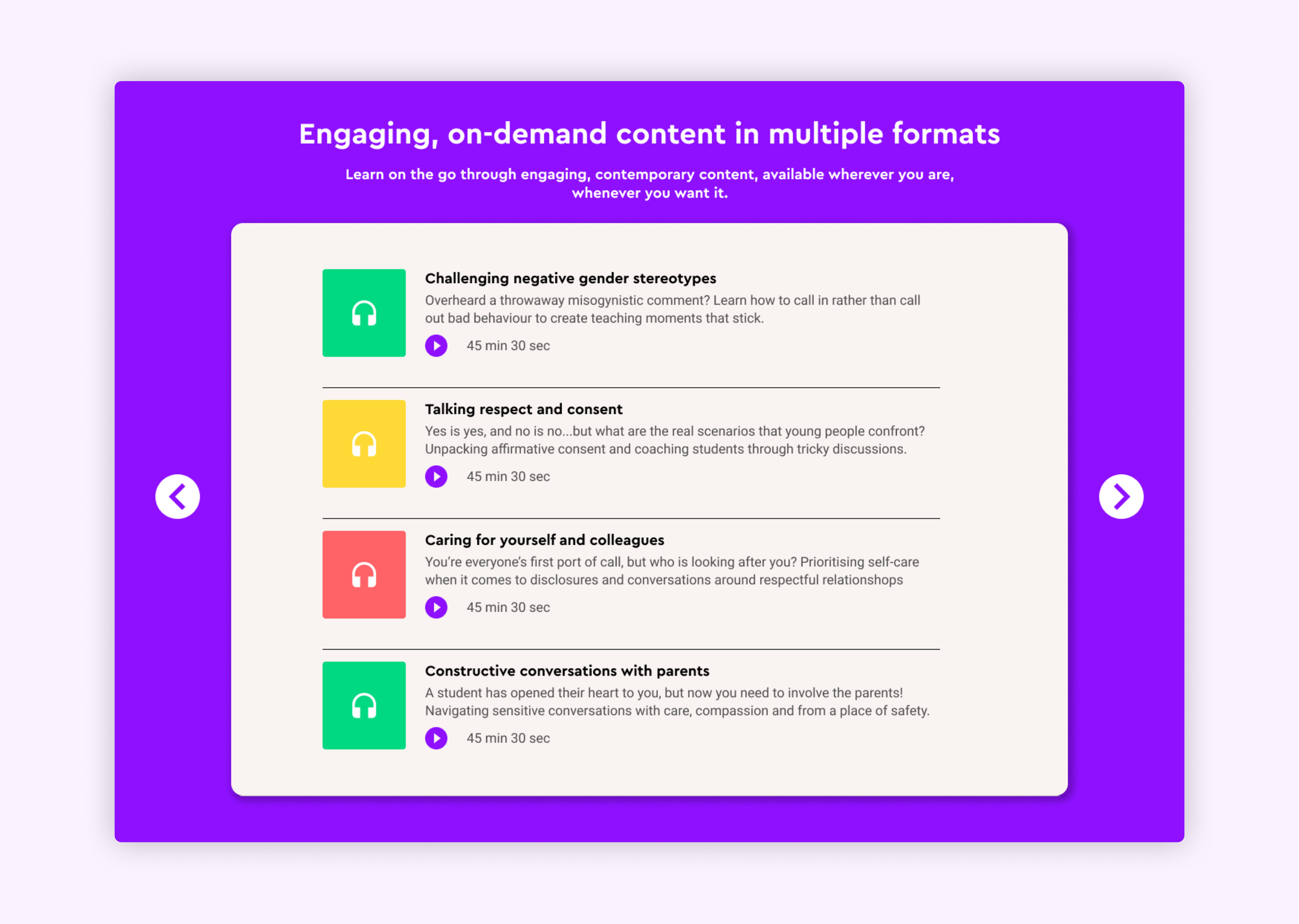
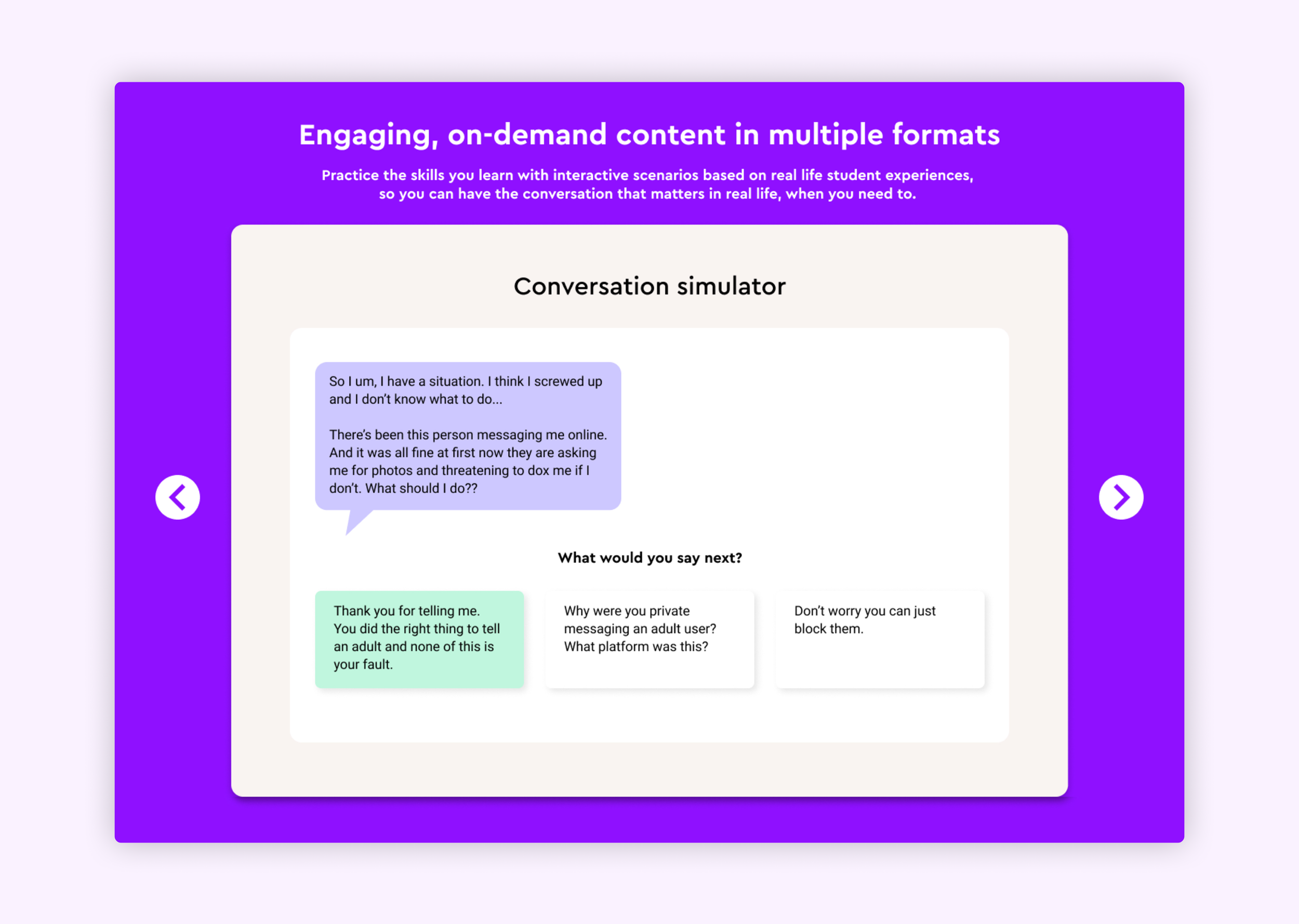
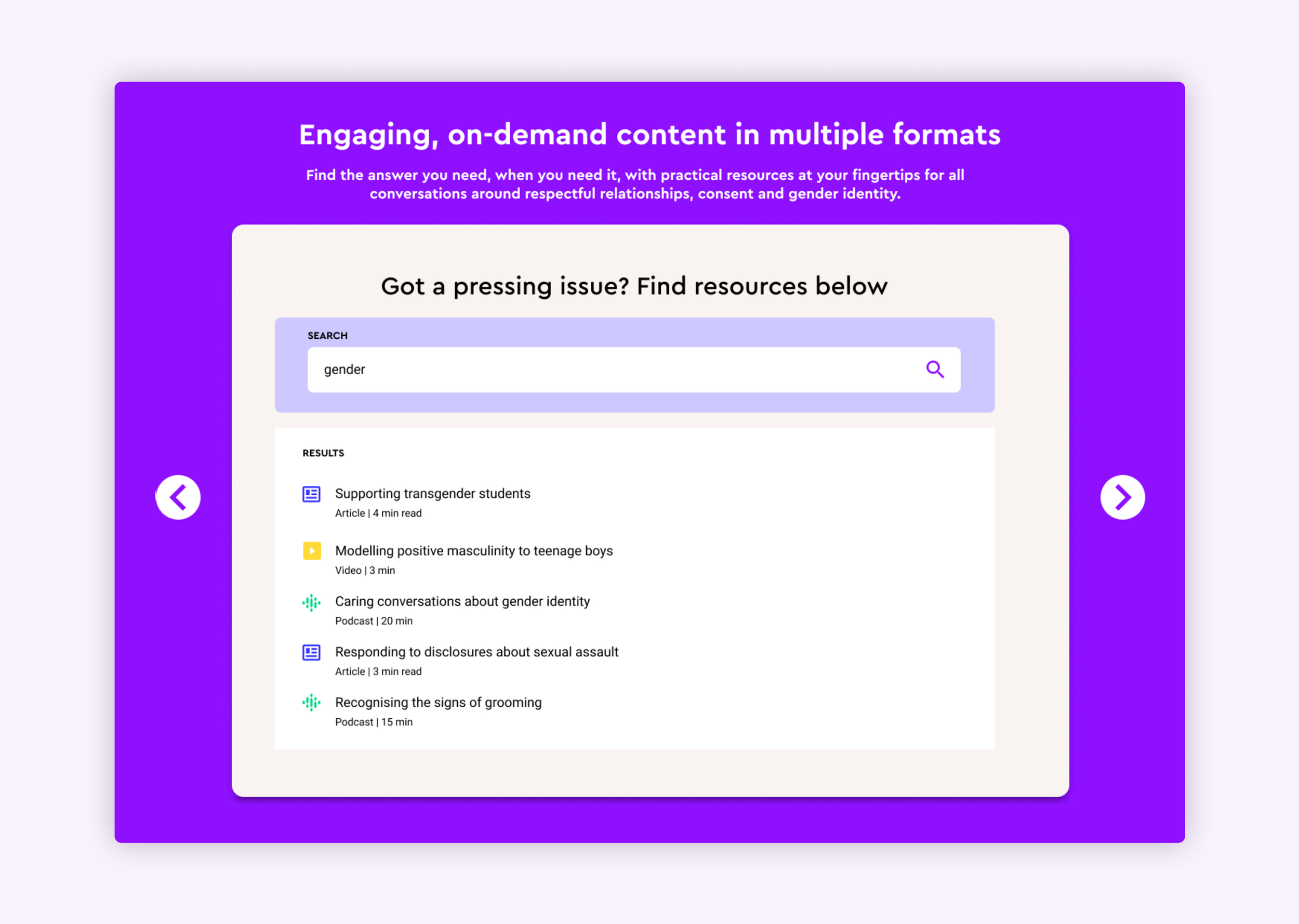
The following product concept was used as a stimulus during phase 2 to enrich conversation about a potential solution, providing a reference point for value proposition, features, price and product bundling.
It fit the bill in terms of what PD decision makers and teachers would like to see as well as what our client had capacity to deliver.
More like this
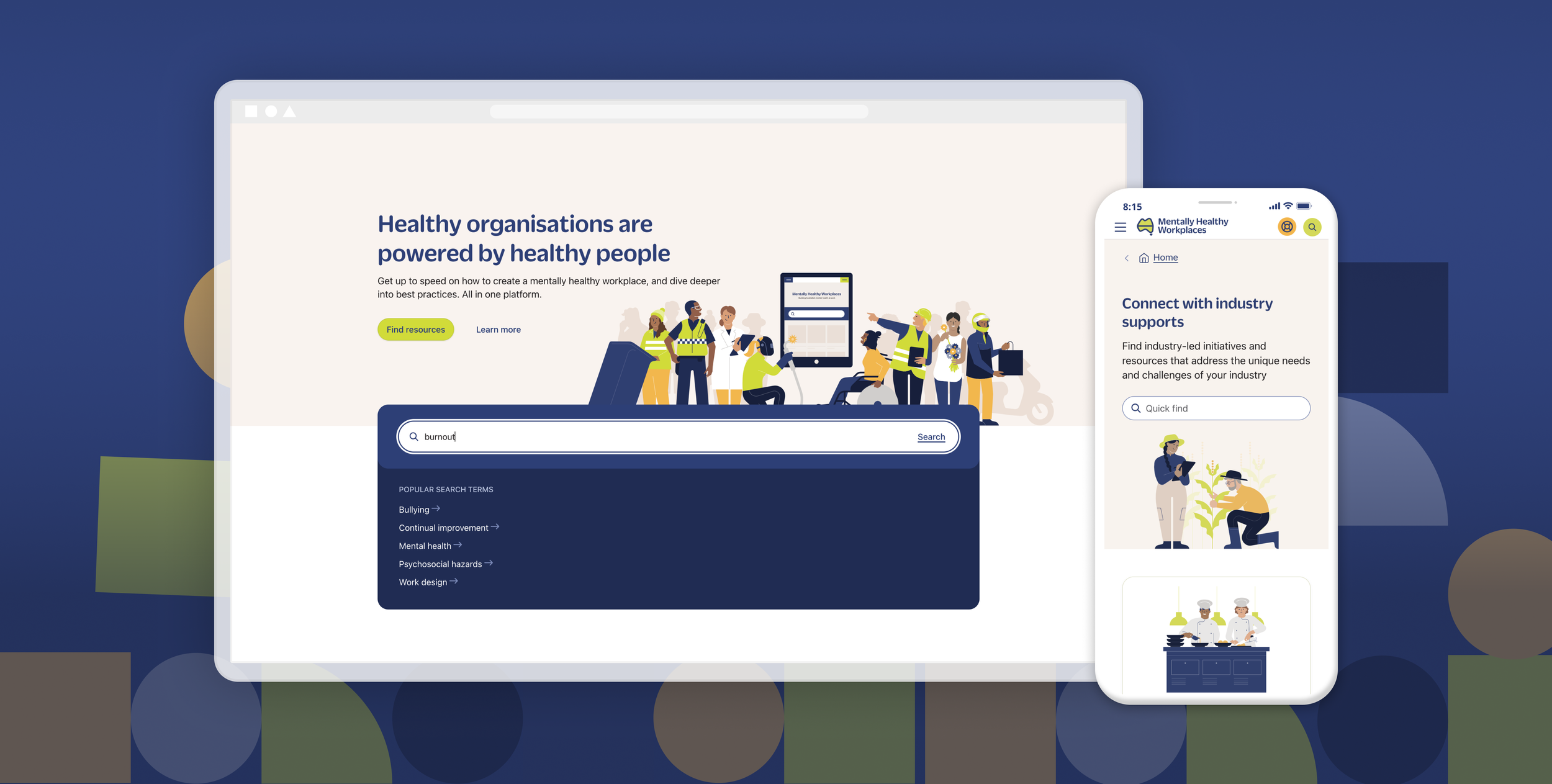
Mentally Healthy Workplaces
Human centred product design for better mental health in all Australian workplaces.

NSW Department of Customer Service
Usability and content research supporting a customer-focused content site for all of NSW government.
Gumtree
Continuous feature discovery for a shipping MVP for Gumtree, using a Dovetail research repository.